On Leadership
The world of man is composed of three things: matter, myth, and energy. Of these, myth is most important.
Humans weave reality through stories. To get along at all, people must have shared stories, or at least stories that are compatible. This is true at the highest scale of world religions and universal declarations of human rights down to family systems down to the stories we tell ourselves in the secret places of the soul.
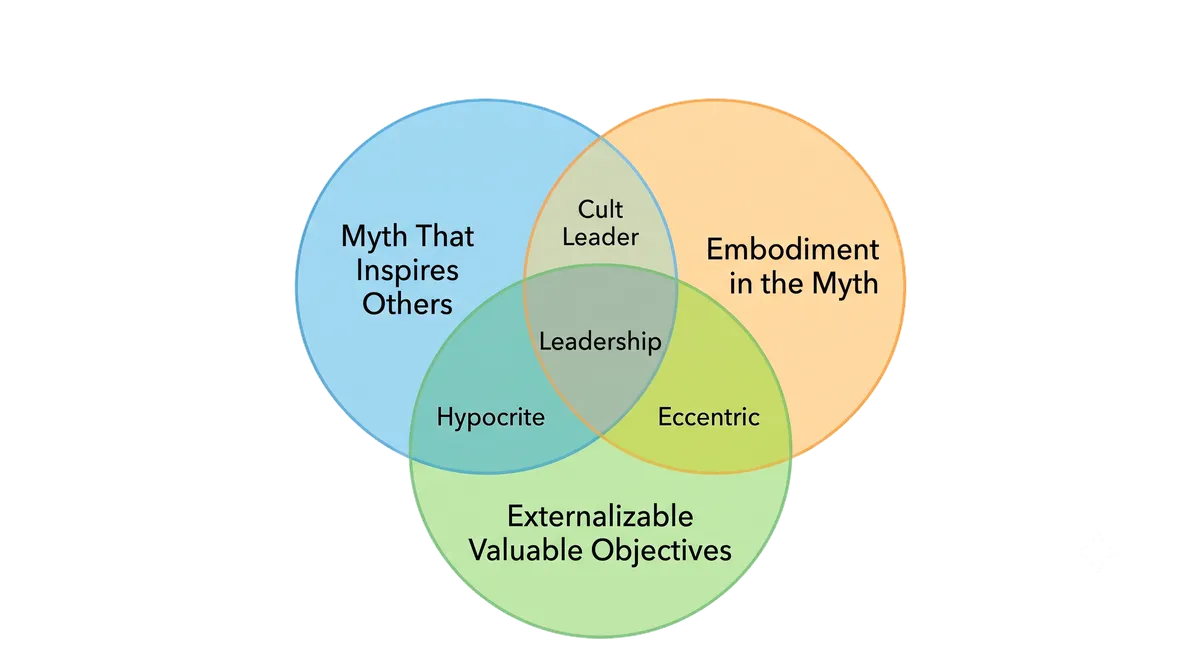
This essay covers leadership through the lens of myth.
There are three components in this lens.
A leader is someone who defines and reinforces a myth that a group of people believe in. The myth must direct their thoughts, actions, and patterns of behavior to some extent. The myth must also defend itself against competing ideas.
A leader is someone who embodies the myth and their place in it. This means the leader believes what they are saying, the people who believe the story also believe the person telling the story is important for the story itself, and that the person telling the story also fits the broader cultural stories the listeners know for defining a leader.
A leader is someone who can define and describe real-world objectives that are externalizably valuable. This could be at a societal level (don't turn the oceans into garbage dumps), state level (on-shored manufacturing pipelines reduce risk in a destabilizing global economy), business level (feature X will allow us to attract potential customer base Y), or a variety of other contexts. The "externalizable" is load bearing. It means someone outside the system can see that at least the intent is good, based on the knowledge the people in the system have, and that the intent + knowledge applied will actually or could actually make a useful change even for people outside the myth.
If you don't have all three, you get various other outcomes.